
UMG Wins DMCA Copyright Suit Against Grooveshark
 A New York state appellate panel issued a ruling Tuesday (April 23) that could rattle social media sites and online radio stations that were relying on the Digital Millennium Copyright Act (DMCA) to shield them from prospection for using music that was recorded prior to 1972. A five-judge panel of the New York Supreme Court's appellate division concluded that "classic" pre-1972 music was not covered by "safe harbor" provisions of the DMCA which, under certain conditions, shields internet providers from liability if they promptly remove copyrighted works when provided notice of specific cases of infringement. In doing so, the judges ruled in favor of Universal Music Group in its lawsuit against Grooveshark, an internet music company that allows users to upload songs. Grooveshark had argued that the DMCA protected it against claims of infringement for music released prior to 1972 because that was the year Congress set for sound recordings to be protected by federal copyright, and further claimed the law did not apply to works made before then. UMG argued its pre-1972 recordings were protected by common law copyright, and that the 1998 DMCA did not apply in this case. "The statutory language at issue involved two equally clear and compelling Congressional priorities: to promote the existence of intellectual property on the internet, and to insulate pre-1972 sound recordings from federal regulation," the judges wrote, noting it was "not unreasonable" to "reconcile the two by concluding that Congress intended for the DMCA only to apply to post-1972 works." [Full story: Variety]
Judge Rules Martha Davis Suit Against EMI, Capitol Can Move Forward
 A federal judge last week ruled the lawsuit Martha Davis filed against EMI Group and Capitol Records can move forward, rejecting label arguments that the Motels singer waited too long to file her case. U.S. District Judge Yvonne Gonzalez Rogers gave two reasons in her ruling why Davis' claims aren't time-barred: Although Capitol believed Davis was contractually required to give written notice of an objection upon receiving a royalty statement, the judge said that the allegations arguably support a basis for "tolling," meaning that the time in which Davis needed to object is paused, and further suggested the matter won't be resolved until after the parties engage in fact-finding. Additionally, the judge said Davis can make the case that she was prevented from learning about the alleged errors by the record company's concealment or misrepresentation. "Davis alleges that Capitol knowingly underpaid her and other class members by reporting digital download licenses as sales of physical record sales, and concealed the fact that Capitol improperly accounted for sales," the judge wrote. Davis is the lead member of a nationwide class action against EMI and Capitol and alleges that if the defendants counted digital music as "licenses" rather than "sales" - because there's no physical manufacturing happening on iTunes - she would see a much heftier royalty rate, per her contract. [Full story: Hollywood Reporter]
The White House Celebrates Memphis Music
 Last week PBS televised a music program highlighting President Barack Obama's recognition and celebration of the "feel good" music that came out of Stax Records, America's delta region, and the city of Memphis, Tennessee. The PBS program was recorded April 9 during a special performance at the White House, and illustrates what poet William Congreve said in 1697, when he wrote: "Music has charms to sooth a savage breast...to soften rocks, or bend a knotted oak..." When we were making music in Memphis at Stax Records in the 1960s and '70s it was to make people "feel good," and we need more of that "feel good" music today - now more than ever. I invite you to view the PBS program titled "Memphis Soul: In Performance At The White House" by clicking on this link, and then pass it on, reprint it, share it on Facebook and Twitter, and email it to as many of your friends and family as you can.
Sincerely,
Al Bell
Not Just For Music: iTunes Accounts For 67% Of TV Downloads
 While most people think "music" when someone mentions iTunes, a new study from the NPD Group shows Apple enjoys a 67% share of the digital TV download market, and a 65% share of the movie market. No competitor comes close, as Apple outstrips the closest individual services - Microsoft's Xbox Video and Amazon's Instant Video - several times over. In fact, Xbox Video accounted for 10% of electronic sell-throughs in movies and 14% for TV shows, while Amazon's Instant Video accounted for 10% and 8%, respectively. The report says Apple's dominance in the segment comes from a high level of customer satisfaction, with eight out of ten iTunes video customers saying their shopping experience was excellent or very good. A similar percentage of people were satisfied with the service's number of current releases and selection. "Apple has successfully leveraged its first-mover advantage and of iTunes, iOS, and the popularity of iPhone and iPad to dominate the digital sale and rental markets for movies and music," senior NPD analyst Russ Crupnick commented in a statement. "While worthy competitors have come along, no other retailer has so thoroughly dominated its core entertainment product categories for so long." [Full story: Apple Insider]
Study: U.S. Hispanics Listen Disproportionately To Internet Radio
 A new report from The Media Audit indicates internet radio listening is exponentially higher among Hispanics in the top U.S. markets, as 32.7% of those surveyed say they have logged on to an online radio website in the past month. Additionally, the survey found 29.8% of Hispanics in those markets listened to internet radio in the past week, suggesting nearly the same amount are logging on weekly as they are in a typical month. Specifically, 28.7% of Hispanics in the Top 10 markets say they logged on to Pandora, while 8.4% logged on to iHeartRadio and 1.9% logged on to Radio.com. Drilling down even deeper, the study indicates that Pandora reaches 34% of the New York metro area's 3.2 million Hispanics weekly, followed by 17.1% who listened to iHeartRadio within the past week. The weekly figures represent more than 1.1 million weekly listeners for Pandora, and 560,000 weekly listeners for iHeartRadio. Likewise, 25.9% of the 3.9 million Hispanics in Los Angeles listened to Pandora within the past week, a figure that represents more than 1 million weekly listeners and tops weekly listening of all Hispanic-programmed stations or radio clusters. [Full story: All Access Music Group]
Universal Music, X5 Form Partnership To Compile Digital Albums
 Universal Music Group and digital music specialists X5 Music have announced the formation of U5, a partnership designed to produce digital compilation albums from the catalogs of Universal's Decca, Deutsche Grammophone, Verve, and Blue Note Records labels. U5 will curate over 50 digital albums for global release each month, with the first slate including a new "50 Greatest" series with such titles as "The 50 Greatest Violin Pieces" by Joshua Bell, "The 50 Greatest Piano Pieces" by Lang Lang, and "The 50 Greatest Performances of Classical Music" compilation. "We see this as the beginning of a unique worldwide partnership that will bring this extraordinary music to a wider consumer audience," X5 CEO Johan Lagerlof said. "With the addition of Universal's classical catalog, we will be able to take our success in classical music to an even greater level." [Full story: Hypebot]


 Pandora announced this week it now has over 200 million registered users for its online radio service. It took the company six years to hit the 100 million mark in July 2011, and less than two years to double that user base, which includes 140 million mobile listeners. According to Pandora's first quarter earnings report, only about 70 million actually use the service on a monthly basis, but that figure still puts the streaming music service well ahead of its primary U.S. competitor, Spotify, which has around 24 million active users - 6 million of which pay for the service. "We started this company to help people discover and enjoy music they love, and to help artists reach and grow their audiences," Pandora's founder Tim Westergren said in a statement. "Only in our wildest dreams did we imagine what it would become. It is now clear that radio is changing, and that's great news for music fans and for the tens of thousands of working artists who now have a home on the air." Interestingly. MSN Money this week wrote that Pandora actually is stronger than many websites and analysts give it credit for, noting that even Apple - in its quest to launch is rumored iRadio service - has a new-found comprehension of Pandora's competitive advantages and what such a service means for the sale of music downloads. [Full story:
  SoundExchange distributed $117.5 million of digital performance royalties in the first three months of this year, a record for the first quarter but down from the $122.5 million and $134.9 million distributed in the third and fourth quarters of 2012, respectively. "Our first quarter numbers show that this digital radio revenue stream is continuing to grow," SoundExchange President Michael Huppe said in a statement released on Tuesday. Because performance distributions don't match exactly the royalties that are accrued in a specific quarter, the amounts distributed may not always show the growth in digital radio from one quarter to the next. However, when viewed over multiple quarters, it's clear that internet and satellite radio both are growing at a healthy rate. The most recent distributions are nearly 34% greater than the $88 million distributed in the third quarter of 2011. Note: Internet radio, satellite radio, and cable radio services pay statutory royalties for the performance of sound recordings, and SoundExchange distributes those royalties to record labels, performing artists, and non-featured musicians. Terrestrial AM/FM radio thus far is exempt. [Full story:
  Apple's iTunes Store remains the primary source for buying digital downloads, accounting for 63% of the paid music marketplace in the fourth quarter of 2012, while Amazon is a distant second, with 22%. According to NPD Group's "Annual Music Study 2012," which examined data from more than 12,000 consumer surveys, 44 million Americans bought at least one song track or album download last year, and per-buyer spending on music downloads was up 6% year-over-year, due to teens buying more tracks. The study also found that nearly 40% of U.S. consumers still believe it's important to own their music, with 30% believing that listening to entire albums is important. In fact, the belief in the importance of owning music is actually somewhat stronger among consumers that listen to Pandora and other free streaming services. These listeners, NPD found, were more likely to buy downloads of things they'd heard on a radio or on-demand service. Worldwide, digital music revenues total $5.6 billion, and Apple's iTunes accounts for a large portion of that. The service recently sold its 25 billionth song, with 15 billion of those sales coming in the last three years. [Full story:
 Despite continued growth in Pandora, Spotify, and Slacker, streaming music services may be close to hitting their saturation point - at least in the U.K. According to a YouGov survey, on-demand music and movie providers may struggle to get enough users to pay for on-demand content, especially with Apple expected to enter the streaming music market. Specifically, the study found that approximately one-third of the U.K.'s online population used such digital music services as iTunes or Spotify in the last three months, while only 4% of those who have not yet listened to online music said they plan to do so sometime in the next year. If the research is accurate, Spotify and such rivals as Deezer and Rdio may be left to fight over a tiny market of prospective customers. Among online music users, iTunes is the most popular at 47% of users, while Spotify follows at 13%. "There's scope for services to increase their user base, but that will come from attracting users from other services or increasing the money from their current users," YouGov director Shaun Austin told PC Pro. "There are several ways to do that: one is choice, as with the Spotify model. Different payment options are critical too, so those who pay can pay either monthly subscriptions or paying per track." [Full story:
  Despite the efforts of many key executives in the U.S. radio industry, the Samsung Galaxy S4 will not ship with an FM radio tuner because of shifting consumer demands. In a statement issued this week, the company said, "Our studies show a trend shift of interest to digital broadcasting - namely, the focus on listening to music content on social networks or on the channel YouTube. The flagship model of our devices is targeted at customers who use digital content, which use modern formats and channels of information consumption." While the usage of online streaming services for music or news has increased significantly in recent years, many users limit their consumption of these services because of data caps and overage charges on their plans. By contrast, FM radio offers a relatively low-tech and low-bandwidth way to listen on a smartphone, and broadcasters have been pushing for manufacturers to include an FM chip as standard equipment on new devices. Note: The new Galaxy S4 features either a 1.6GHz eight-core Exynos 5 Octa processor or a 1.9GHz quad-core Qualcomm Snapdragon 600 processor (depending on country), 2GB of RAM, and a 5-inch full HD AMOLED display. [Full story:
  The horrific and cowardly events that transpired at Monday's Boston Marathon are painfully difficult for all of us to understand, much less accept - even in the context of today's tumultuous world. Despite our religious, political, and cultural differences here on planet Earth, I find it unfathomable that anyone would strive to kill or maim innocent people in order to illustrate their own barbarism and savagery.
  Tuesday night (April 16) PBS televised a music program highlighting President Barack Obama's recognition and celebration of the "feel good" music that came out of Stax Records, America's delta region, and the city of Memphis, Tennessee - music that during some equally tumultuous years in the history of this country "served to sooth the savage breast." The PBS program was recorded April 9 during a special performance at the White House, and this week President Obama received a hand-delivered letter I wrote congratulating him for recognizing the contributions of the artists, writers, and musicians that made this music what it was - and is.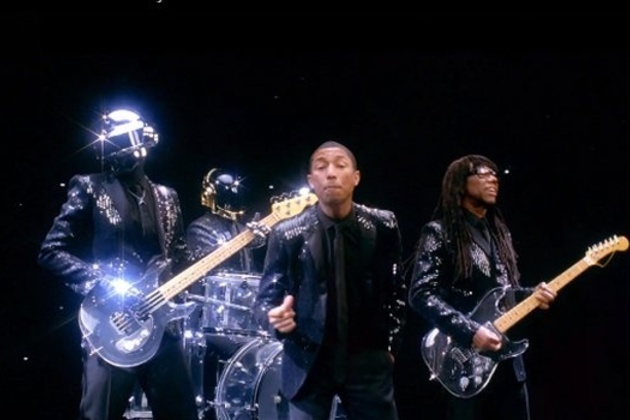
 One out of three Americans aged 12+ listen to online radio on a weekly basis. That's the focal point of the latest edition of "The Infinite Dial," a joint research project released by Arbitron and Edison Research, highlighting just how far internet radio has come over the past several years. According to the study - the 21st since the first "Infinite Dial" report was issued in 1998 - online radio listeners report listening for an average of 11 hours 56 minutes per week, up by more than two hours over last year's listening levels (9 hours 46 minutes), and almost twice that reported in 2008 (6 hours 13 minutes). Additionally, 53% of all Americans 12+ (an estimated 139 million people) own a smartphone, and three out of four aged 18-to-34 own one. Plus, 29% own a tablet, a number that's up more than 70% from last year's 17% ownership. "We are now seeing the highest levels of weekly online radio listening with the increasing strength of AM/FM streams and other online radio brands and the near ubiquity of devices in which consumers can listen," Arbitron SVP/Marketing Bill Rose said in a statement. "In the smartphone, the majority of Americans now have powerful computers in their pockets, which has irrevocably altered not only out-of-home listening behavior, but out-of-home purchase behavior as well," noted Edison Research VP/Strategy and Marketing Tom Webster. [Full story: Arbitron]
  According to a study released this week by the NPD Group, young people aged 13 to 35 increasingly are listening to internet radio, despite the broad and ready presence of AM/FM radio. The study reveals that this demographic spends an average 23% of their weekly music listening time using such online streaming radio services as Pandora and Spotify, an increase from 17% from just a year ago. As might expectwed, as internet-radio listening rose among this age group, listening to AM/FM radio - which now accounts for 24% of music-listening time - declined 2 percentage points. By contrast, in the 36-and-older age group, internet radio accounted for just 13% of music listening, while AM/FM radio dominated listening methods with a 41% share. "Driven by mobility and connectivity, music-streaming services are rapidly growing their share of the music listening experience for teens and young adults, at the expense of traditional music listening methods," said Russ Crupnick, SVP/industry analysis at NPD. Noting that 62% of consumers in the 13-35 age group who used streaming services did so more than they had in the past, and 51% reported that most of their music listening was in their cars, he observed, "Whether it's listening to AM/FM radio or Pandora, music continues to be an integral element in the American driving and commuting experience." [Full story:
  Never heard of Ben Looi? Few people have - yet - but the cofounder and chief executive of Singapore-based digital music platform Tell My Friends intends to change that by using a multi-level marketing strategy to take on iTunes. Using what he describes as a "social network marketing platform" for digital products, Looi is going up against Apple's 28 million songs with about 2,950 paid downloads of music tracks and 647 beta users (at last count). Here's how it's designed to work: When people buy a song through the Tell My Friends platform, they get a link to share the song through Twitter, Facebook, email, etc. If their friends click on the link they can buy the song, too - and the person who posted the link will get a percentage of the proceeds. Then, when those second-tier friends buy a song, they get a link, too - and anyone using that link will be sending revenues to that person, as well as the original poster. In order to not qualify as a Ponzi scheme, the original link poster gets a percentage of sales all the way through 10 levels of referrals. "We just want to do our part to help [people] make the music industry better than what it is now, by giving them this model to make a living out of music," Looi said in a recent interview with Venture Beat. Recognizing that the company is a multi-level marketing business, Looi insists it's all legal - at least according to the laws of his home country. [Full story:
  The Recording Industry Association of America (RIAA) this week announced that recorded music revenues in 2012 slipped 0.9% to $7.1 billion. While it's not the kind of decline experienced by the recorded music business over the last decade, the news is somewhat troubling considering that sales actually improved 0.2% in 2011. The $7.1 billion is still above 2010's low point of $7 billion, but the industry clearly did not sustain the bounce-back analysts were hoping for. The bright spot in the RIAA report was the news that U.S. digital music revenues rose 14% to top $4 billion for the first time ever, with digital now accounting for 59% of the U.S. recorded music market's dollar value. Digital download revenues rose 8.6% in 2012 to $2.9 billion, with albums accounting for $1.2 billion of that - and 35% of all album sales by volume. Additionally, "access" models - free and subscription-based streaming services as well as digital radio services like Pandora and Sirius XM - accounted for just over $1 billion (15%) of total recorded music revenues in 2012, up from 9% in 2011. Approximately $462 million of that sub-total came from SoundExchange distributions, while $571 million was generated from streaming/subscription services not covered by a statutory license. By the end of 2012, 3.4 million Americans were paying for on-demand music services. [Full story:
  Despite the small slip in overall music sales reported by the Recording Industry Association of America (see story, above), many analysts believe music consumption is stronger than ever - with an increasing amount of it coming in the form of streaming. In an article in this week's issue of Forbes, former MusicNet CEO Alan McGlade says this huge surge in such subscription services as Pandora, Spotify, Pandora, and Rdio suggests that - contrary to the vision of late Apple CEO Steve Jobs - consumers may actually prefer to rent their music rather than own it. "The industry has come full circle and subscriptions delivered by various providers are becoming the dominant model," McGlade writes. "The buzz is that Apple will soon introduce an on-demand music streaming service, as will Google and other major media and electronics companies. Consumers will have a rich variety of options for instant access to music, and discussion of ownership will become irrelevant. And with a little bit of luck, this trend will ignite a new era of growth for the music business." Noting that Steve Jobs was contemptuous of subscription services, McGlade points out that ownership has always been an abstract concept in the digital realm, particularly before cloud computing. "[Jobs] was firm in his stance," he observes. "He said that people weren't willing to have their music disappear if they stopped paying fees." [Full story:
  Radio industry over-the-air revenues improved 1.5% last year to $14.3 billion, with much of that growth coming through online radio ad revenues, which reached $491 million, or 3.3% of the total. That's the word from BIA/Kelsey's "Investing In Radio® Market Report," which predicts radio's online revenue growth will hit $818 million by 2017, while the industry's combined total revenue will reach $17 billion that year. The company also notes that station revenue mix will continue to shift somewhat, and income from online advertising will rise at a rate of about 10.8% annually over the next five years, vs. 2.5% from over-the-air. "As the digital marketplace continues to rise in all sectors of advertising, radio is improving its listener engagement online and benefitting from the value of its web and mobile assets," BIA/Kelsey VP/chief economist Mark Fratrik said. "Overall, the industry is still recognized as an important part of the media mix as it continues to meander around, rising slightly with the rate of inflation but not keeping up with the economy." [Full story:
  Trying to boost its sagging fortunes in the smartphone universe, BlackBerry this week announced an alliance with Zimbalam that's designed to bring a digital music distribution service for independent artists and labels to the new BlackBerry 10 device. The two companies reportedly are working together to provide artists an interface that allows them to create an account, choose their release dates and the territories they want to sell their music in, pay a small distribution fee, and begin selling their music. Artists remain free and independent and earn 90% of their royalties from sales. "Zimbalam exists in order to allow unsigned artists to get their music on digital music stores and to find their audience," said Denis Ladegaillerie, CEO of Zimbalam. "We are excited to be working with BlackBerry as it will give artists access to a different fan base and help with the discovery of their music." BlackBerry VP Martyn Mallick added that "Whether you're an independent artist, label, or simply a customer who loves to create music, Zimbalam through BlackBerry World will be a fantastic vehicle to share your music with the world." [Full story:
  Clear Channel Media/Entertainment announced this morning (March 28) that its iHeartRadio Music Festival is returning to the MGM Grand in Las Vegas on September 20-21, and once again is featuring Macy's iHeartRadio Rising Star - a campaign designed to spotlight emerging musicians and find one lucky artist or group to perform at the festival. Clear Channel and Macy's have selected 25 up-and-coming musicians to present to fans, who will then vote online for their favorite emerging artist. Voting begins April 1 and will run through May 12. "We are excited to once again partner with Clear Channel for the Macy's iHeartRadio Rising Star campaign," Macy's CMO Martine Reardon said in a statement. "From up-and-coming fashion trendsetters to rising music talent, Macy's has a long history of providing major platforms for the next generation of stars to shine. [Rising Star] is a fantastic way to engage our fans in that star-making process, adding an exciting layer of entertainment for customers to enjoy." Last year's winners of the competition, Megan & Liz (above right), received nearly 3 million votes from fans across the U.S. [Full story:
  More and more automakers are expanding their in-dash entertainment systems beyond traditional AM/FM radio, with BMW the latest to announce a new suite of apps that are compatible with the company's iDrive system, bringing internet radio to new and recent models. At this week's New York Auto Show the German carmaker introduced a system that lets drivers use an iPhone 3GS through iPhone 5 to access content from Audible, Pandora, MOG radio, Stitcher, Rhapsody, TuneIn, and Glympse by plugging the device into a dock connector (available for all new BMW models) or by plugging the it into the car via USB. Users select the individual app within the phone before plugging it into the car so it shows up on the iDrive screen, through which they can select content, skip forward or back 30 seconds, and speed up or slow down playback. The system is "backwards compatible," meaning that owners of older BMWs with iDrive can upgrade their system to work with the new apps. The apps connect to the internet using the owner's cell-phone service, so it would be wise to check on data capacity before using them. Access to BMW apps comes standard on the 5, 6, and 7 Series, as well as on the X5 and X6. It's a $650 option available on most other BMWs. [Full story:
  Depending on the source, music piracy either is the scourge of the recording business or much ado about absolutely nothing. This week the European Commission got into the debate, stating that not only is music piracy not a problem, but it actually could help industry sales. According to a report issued by the EU's Information Society Unit, "[despite] trespassing of private property rights, there is unlikely to be much harm done [by piracy] on digital music revenues." The two authors of the report, Luis Aguiar and Bertin Martens, go on to say that "digital music piracy should not be viewed as a growing concern for copyright holders in the digital era. In addition, our results indicate that new music consumption channels, such as online streaming, positively affect copyright owners." Using several approaches to analyze the effects of downloading and streaming, they found no evidence of sales displacement. In fact, "our different estimates show relatively stable, positive, and low elasticities of legal purchases with respect to both illegal downloading and legal streaming," they wrote. "All of these results suggest that the vast majority of the music that is consumed illegally by the individuals in our sample would not have been legally purchased if illegal downloading websites were not available to them." [Full story:
  Register of Copyrights Maria Pallante told a House congressional subcommittee yesterday (March 20) that many areas of U.S. Copyright need review, if not outright reform. The hearing, in part, was a response to a White House announcement last month that Americans should be able to unlock their mobile phones and use them with any compatible carrier they choose. Previously, the Copyright Office had said that, because of current copyright protections, people who unlock their mobile devices could be subject to criminal or civil penalties. Pallante said any change to copyright laws is likely to come slowly, noting that "a few years of solid drafting and revision is what you're really looking at if you want to do something." One of many elements that could potentially come under scrutiny is the Copyright Act of 1976 which, among other things, allows for fines of up to $150,000 per violation, including sharing a copyright-protected song on a peer-to-peer network. While Pallante was not suggesting that file sharing should be legal, she said there may be instances in which making copies of protected works should be authorized under a concept known as "fair use." "Not every reproduction is a reproduction with a capital R," she observed. [Full story:
  There's been a lot of talk lately insisting that subscriptions to online streaming services are generating significant revenues for recorded music companies, but a new report issued by industry analyst Mark Mulligan says streaming currently accounts for just 4% of global industry dollars. Furthermore, streaming revenues are just 12% of the broader digital pie, which includes all paid downloads via iTunes, Amazon, and other online stores. Mulligan told Digital Music News (no relation to this publication) that "however much you try to make [streaming] grow, you're not going to make it the majority digital [revenue contributor] in the next five years unless downloads collapse. Now, downloads could collapse, if Apple did something really serious with streaming, but we know that downloads are increasing with all of Apple's expansion. Downloads are getting new customers as well... Apple is getting digital music customers via the iPad, [which] is important, because... when Apple sneezes, the music industry catches a cold." [Full story:
  According to a new Nielsen study, 40% of U.S. consumers - those classified as "fans" - are responsible for 75% of all music revenue and actually spend between $20 billion and $26 billion on music each year. The study, titled "The Buyer and the Beats: The Music Fan and How to Reach Them," further reveals that this group could spend between $450 million and $2.6 billion more on music each year if compelling content is made commercially available. Interestingly, the study found that the most avid "fans" have downloaded the most tracks for free - approximately 30 digital songs per fan over the course of a year. The study also found that a majority of fans want greater engagement with their favorite musicians and would be willing to pay considerably for that access. They want to know more about what they're like as people, and get a better understanding of the creative process. These Fans are prepared to pay more for exclusive or premium content, autographed products, and special merchandise. Additionally, these consumers would consider paying about $30 for an "online ticket" to view an exclusive live webcast. "We are finding that there's a lot of untapped demand for additional content, which can translate into beneficial and profitable opportunities for artists, labels, and advertisers," Nielsen SVP/Client Development/Analytics David Bakula said. [Full story:
  Speaking at the Radio Days Europe 2013 conference in Berlin last week, British Phonographic Industry (BPI) Chairman Tony Wadsworth said more than 50% of all U.K. music revenues will come from digital this year, and insisted that networked devices and digital service integration in the car industry point to a bright future for the industry. "In the U.K. this year we will move into a majority digital music market with more than half of revenues coming from digital," he told the audience. "The ten-year market decline that we have experienced will reverse with the industry continuing to embrace new ways of doing business and new technologies, and we will start to enjoy the commercial rewards that come from giving consumers what they want." Looking back over the past 10 years, Wadsworth said the speed of innovation has been dizzying. "In that decade we have seen the entry of iTunes, Amazon MP3, 7digital, YouTube, Spotify, Deezer, Rdio, Vevo, Xbox Music, Google Play, and more," he said. "[Then there's] the arrival of Facebook, Twitter, smartphones, tablets, widespread consumer broadband, 3G, and now 4G mobile connections. The music industry has embraced all of these changes, which has helped drive impressive growth in digital - not just in revenues but also in the diversity of services in the market. There are now over 70 licensed music services in the U.K., meeting a huge range of consumer needs." [Full story: